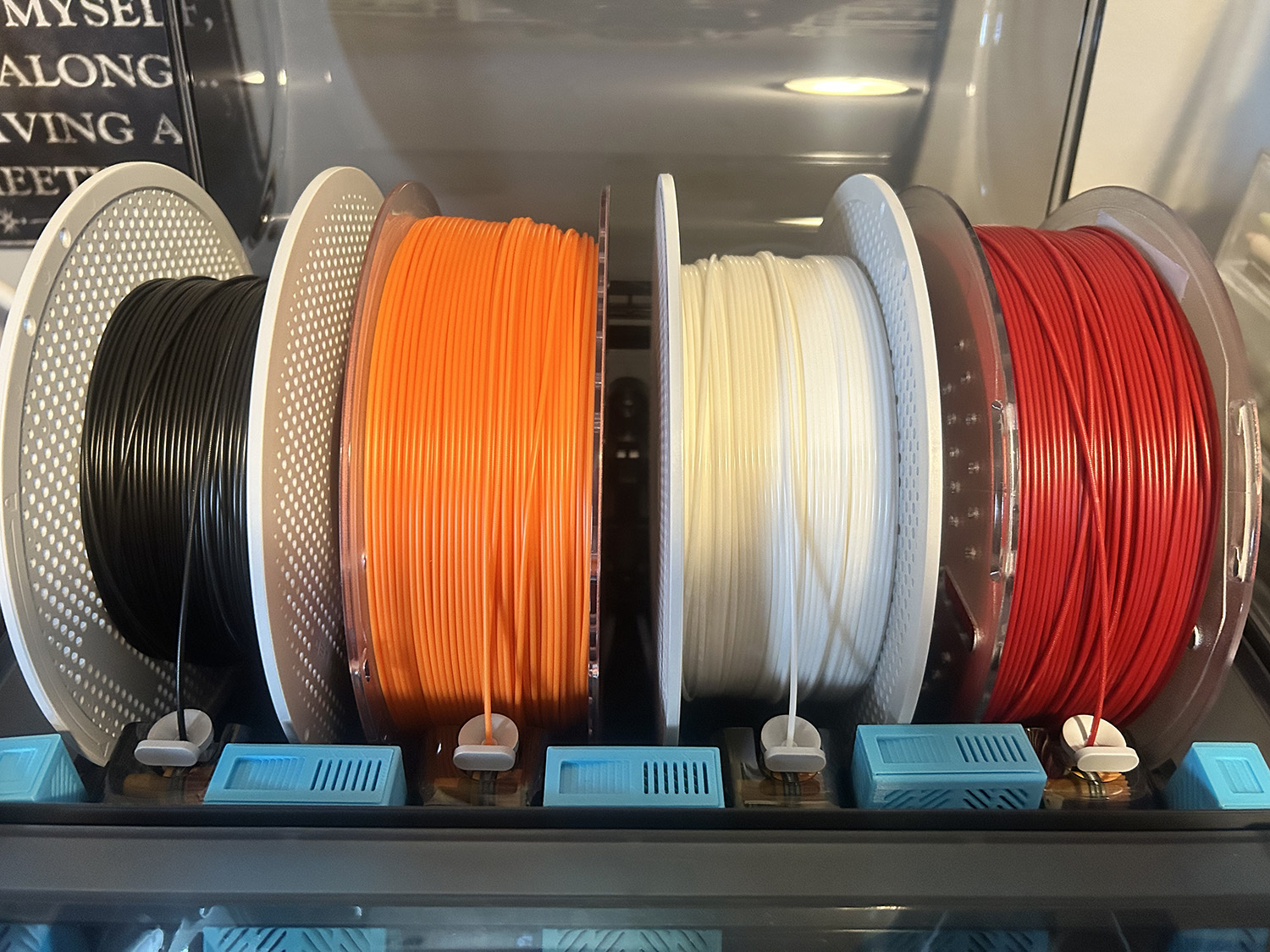
At the time, or shortly after purchasing your 3D Printer you will want to purchase some filaments to work with. There are several types of filaments availalble for varied uses as well as many different brands. They range from beginner-friendly to industrial engineering materials. What you purchase depends on what you want to do and there are various things to consider before purchasing. Hopefully the following information will help you to decide what works for you.
Types of Filament
I mainly print PLA and PETG for home decor and miniatures. Printed toys are mentioned a lot with these materials, but I question toys for children who may put the items in their mouths. I think better safe than sorry! You need to make your own choice on that subject.
- PLA – This is the easiest filament to use and what most beginners start with. It’s the most popular type of filament sold. It prints at low temperatures with minimal warping, making it ideal for visual models, toys, and decor items. It is safe to print indoors and has little to no smell, depending on how sensitive you are to smells. I am super sensitive and have not noticed any smell when printing with PLA. Note that it is not food safe and is sensitive to heat, so suggested for items placed outdoors in the heat or direct hot sun. You will find more colors of PLA than any other type of filament.
- PETG – Combines the ease of PLA with higher strength, chemical stability, and moisture resistance. It works well for outdoor prints and durable mechanical parts. It has little to no smell and is safe for indoor printing. There is a good variety of colors available in PETG on the market.
- ABS / ASA – Tough, impact-resistant, petroleum-based materials that offer high heat resistance. It is favored for outdoor use due to its superior UV resistance. It requires a higher temperature and an enclosed printer. I don’t suggest this material for indoor printing unless you have a very good ventalation! There will be a smell with this material, and not great for breathing fumes.
- TPU – This is an elastic, rubber-like material used for flexible objects like phone cases, grips, and such. Must have very good ventilation!
- NYLON – An engineering-grade polyamide with high tensile strength, wear resistance, and toughness, ideal for functional gears and mechanical components. It requires high temperatures and strict moisture control. Another material I don’t suggest for indoor printing, and it does require very good ventilation.
Bambu Labs Filament Guide is worth taking a look at!
Brands of Filaments
There are a variety of filament brands on the market today. I suggest that you try several and choose what you like best. Below is my experience with several brands I have used so far.
Bambu Labs Filaments – If you don’t mind the wait for shipping, Bambu Labs filaments can be purchased online, and they frequently have a good sale going on. You can get good discounts based on the number of filaments you purchase. Be aware that they can often be limited in stock. You can also search and find Bambu filaments on Amazon, but the choices can be limited. I have heard that some big-box local stores are now carrying this brand. An advantage of using Bambu filaments is that they contain an RFID code on the spool, allowing the printer to read and set the type of filament in the software.
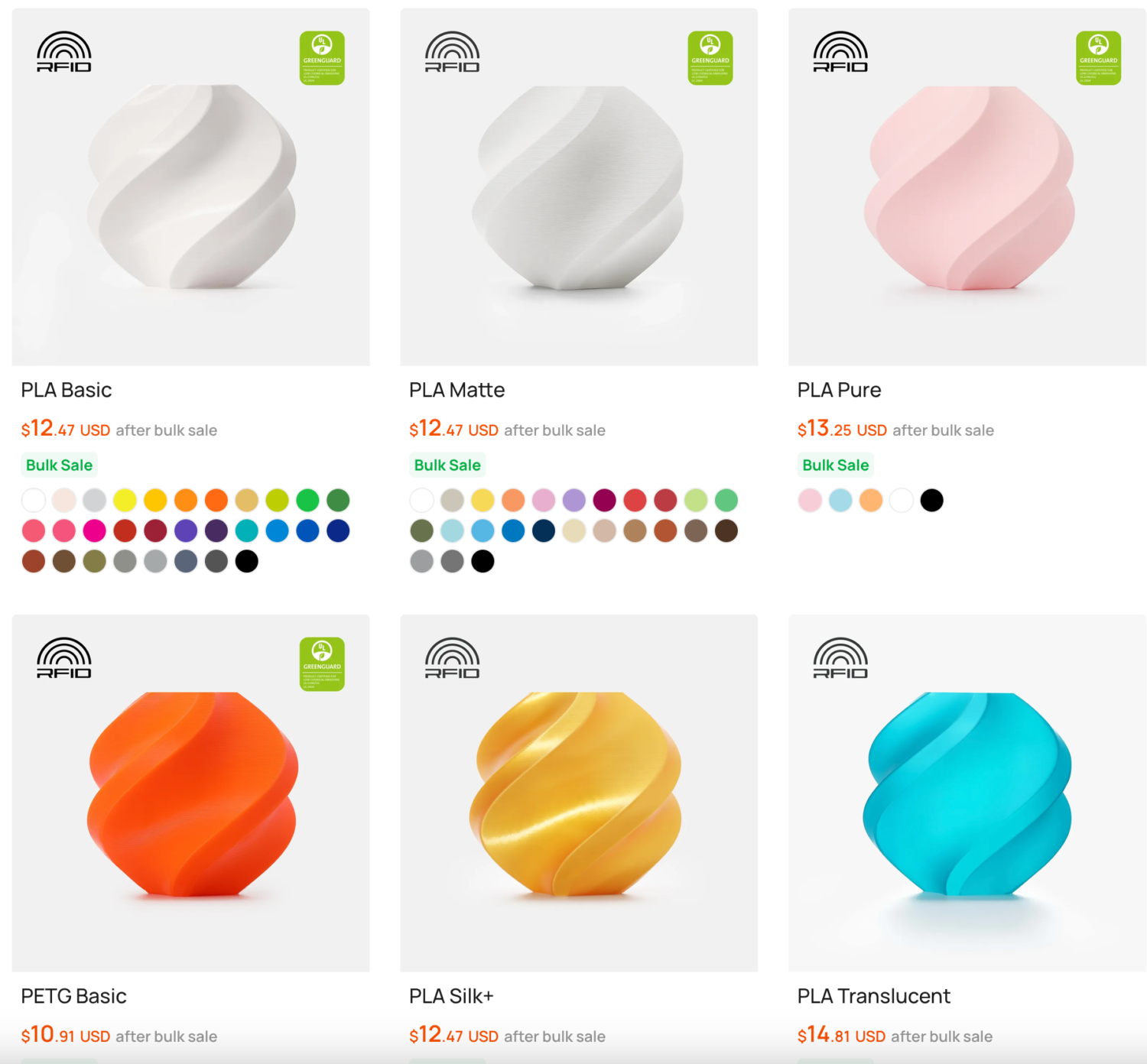
I have used the following other brands of filaments with the same success as the Bambu Labs filaments and highly suggest that you try them out!
- Polymaker – This is another popular brand that I want to try out but have not purchased any so far. It does get great reviews. They also have discounts based on the amount of purchase. You can also find a good selection of Polymaker filament on Amazon.
- Sunlu – I picked up one filament from Amazon and had a great experience with it. A lot of people seem to like it.
- Hobby Lobby Filament – Stock tends to clear out quickly. They also sell refillable filament spools! It is nice to be able to just run out locally and pick up filament instead of waiting for shipping.
- Michaels Filament – Very limited stock and not a lot of colors. In-store shopping is better than online. I only recently purchased a black PLA from Michaels and have not tried it yet but reports are that it prints well.
NOTE: Some filaments will come on a plastic spool while others might be on a thick cardboard spool. I have used both without any issues. When looking at filaments, you will often see them available on a spool or as a refill. Be sure to read the descriptions and be sure what you are purchasing. As for spools, you can find printable spools in MakerWorld for various filament brands. Some brands sell refillable plastic spools as well.
Specialty Filaments
I have tried out a few specialty filaments such as PLA Marble, PLA Silk, and PLA Wood. Silk has no issues, but I do see it mentioned that with Marble and Wood filaments, the grit in them can wear down the nozzle. It is suggested that if you like to print these a lot, you should invest in the Hardened Steel Nozzle.
Here is a look at printed items with two of these filaments. I do love both of these!
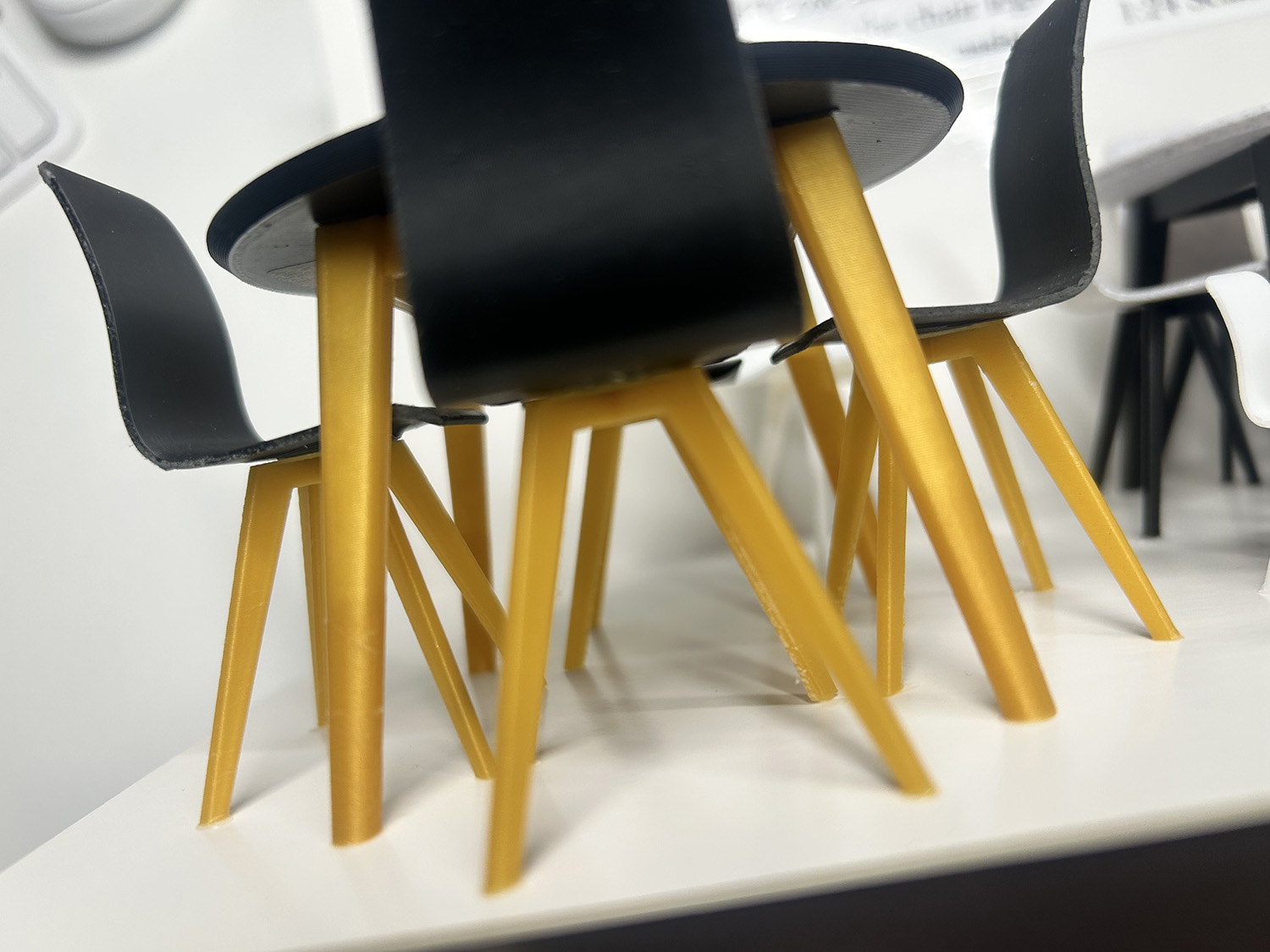
Table and chair legs printed in Hobby Lobby PLA Silk Gold
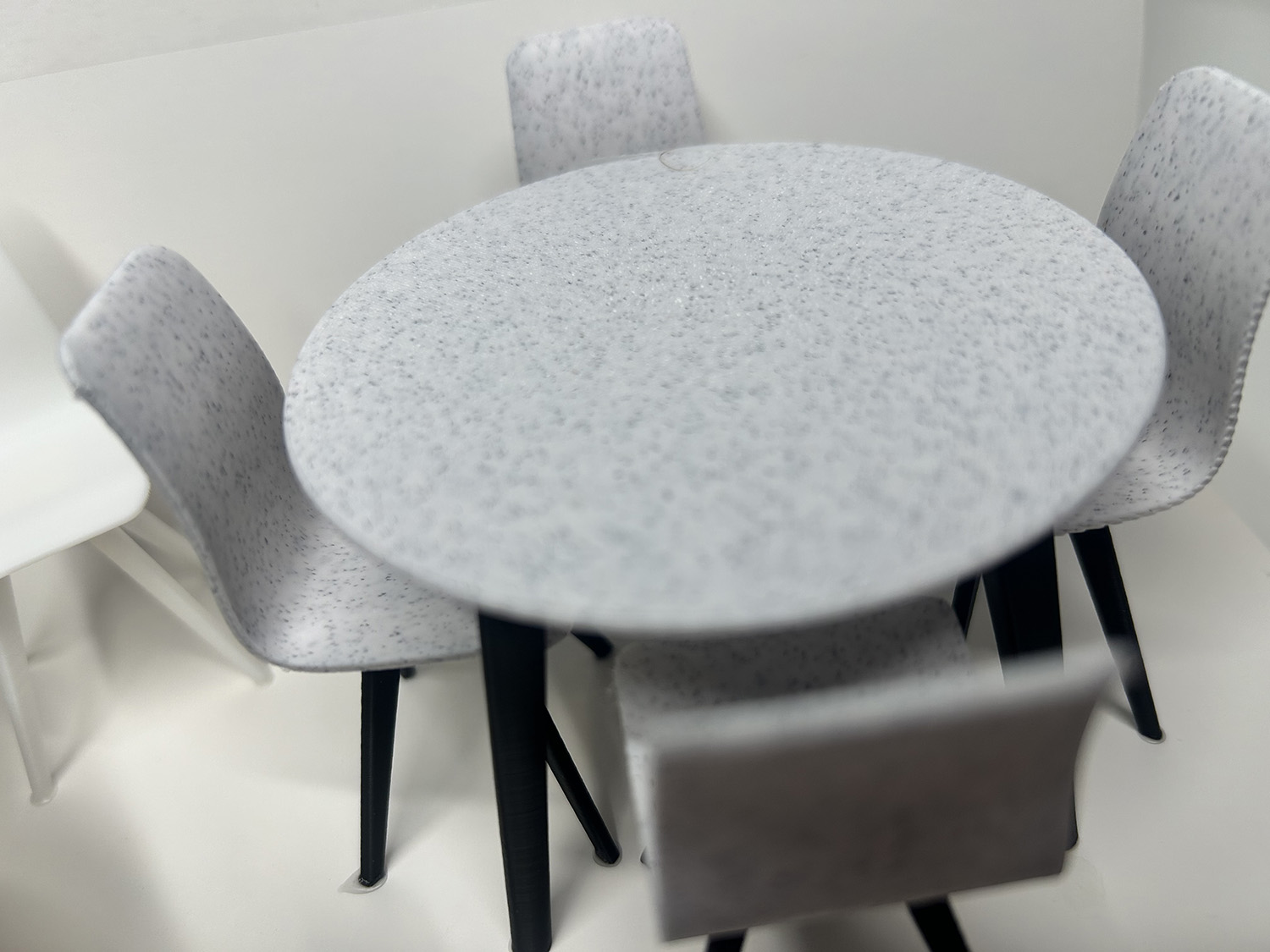
Tabletop and chair seats printed in Hobby Lobby PLA Marble White
There are a lot of YouTube videos on various filaments. Several channels work with a variety of filaments and show finished projects using the filaments. Get comfy and browse YouTube for some of these channels!
I hope this information gets you a bit informed and started with choosing your first filaments. I will make some update posts as I try out new filaments in the future.
SUBSCRIBE to my newsletter to get email notices of when I add new posts to the blog!!
Till next time . . .
Teri